YouTube Monetization Policy 2026: The Rules, Including AI Content
Getting into the YouTube Partner Program (YPP) is only half the job. Once a channel is monetized, it has to keep following YouTube's channel monetization policies, or it can lose ads on single videos or be removed from the program entirely. This guide walks through the rules that matter in 2026, including how YouTube treats AI-generated content.
1. The entry requirements (YPP)
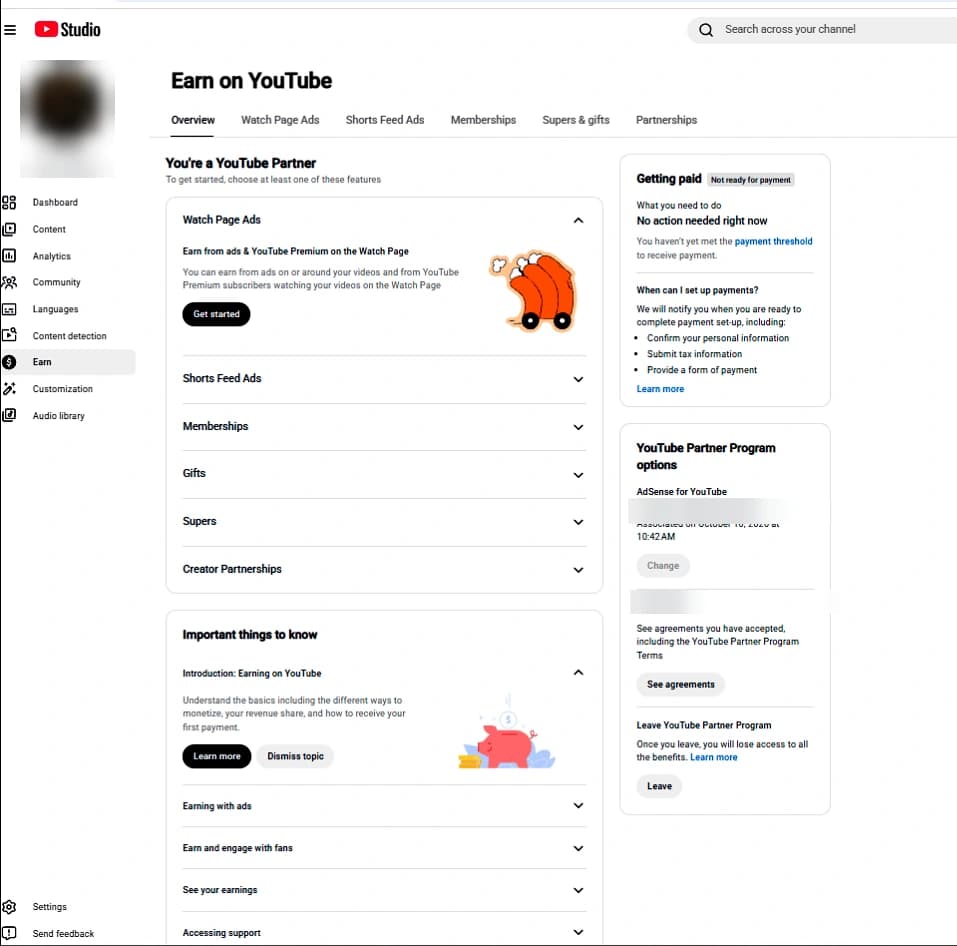
To earn from ads and YouTube Premium, a channel currently needs 1,000 subscribers plus either 4,000 public watch hours in the last 12 months or 10 million public Shorts views in the last 90 days. A lower tier (500 subscribers, 3 recent uploads and 3,000 watch hours or 3 million Shorts views) unlocks fan funding such as memberships and Super Thanks, but not ad revenue.
- 2-Step Verification must be on for the Google account.
- No active Community Guidelines strikes.
- A linked AdSense account, and YPP must be available in your country.
- A human review of the channel as a whole. Hitting the numbers does not guarantee approval.
2. Inauthentic content: the rule that removes the most channels
On July 15, 2025 YouTube renamed its "repetitious content" policy to "inauthentic content". YouTube described it as a clarification rather than a brand-new rule: content that is mass-produced or repetitive, with little variation from video to video, is not eligible to earn money.
- Hundreds of near-identical videos made from the same template.
- Slideshows or stock clips with a robotic voice reading a script, repeated across the channel.
- Videos that differ only in a keyword in the title, the same thing re-uploaded again and again.
- Content that looks made to farm views rather than to inform or entertain a viewer.
Reviewers look at the channel as a whole, not one video. A single weak upload rarely causes removal; a pattern does. If a channel is removed for inauthentic content, it can usually reapply after 90 days once the problem is fixed.
3. Reused content: other people's material
Reused content is a separate policy and it did not change in 2025. It covers material you did not create, such as clips from TV, films, other creators or the web. Using it is allowed only when you add something significant: real commentary, education, criticism, a narrative, or edits that change its meaning.
- Fine: a reaction where you pause and explain, a review with your own analysis, a documentary that uses short clips to support your story.
- Not fine: compilations with no commentary, re-uploads with a filter or music added, top-10 videos built only from other people's clips.
4. AI content: what is allowed in 2026
YouTube does not ban AI. Scripts, voiceovers, thumbnails, editing and even fully AI-made visuals can be monetized when the video is original and useful. What gets demonetized is the low-effort, mass-produced output that the inauthentic content rule targets, whether a person or a tool made it.
- Usually fine: AI used to draft a script you then rewrite, AI voiceover on your own research, AI visuals in a clearly creative or educational video.
- Risky: a channel posting dozens of auto-generated videos a day, AI narration over stock footage with no real point of view, AI clones of other channels.
- Not allowed: realistic fakes that mislead viewers, or using someone's face or voice without permission.
5. Disclosing altered or synthetic content
When a video contains realistic content that a viewer could mistake for real, made or meaningfully changed with AI or other tools, YouTube requires you to turn on the "altered or synthetic content" setting during upload. Examples include a realistic voice of a real person, a face swap, or made-up footage of a real place or event.
- You do not need to disclose clearly unrealistic content such as animation or fantasy scenes.
- You do not need to disclose AI used only for help behind the scenes, such as scripts, ideas or captions.
- If you do not disclose, YouTube can add the label itself, and repeated failures can lead to penalties, including suspension from YPP.
The label itself is not a punishment. Disclosing honestly is far safer than hiding it.
6. Advertiser-friendly guidelines (the yellow icon)
Even inside YPP, each video is checked against YouTube's advertiser-friendly content guidelines. Topics like strong profanity, graphic violence, adult themes, drugs or shocking content can lead to limited ads (a yellow icon) or no ads on that video. This affects the single video, not the whole channel, and you can request a human review in YouTube Studio.
- Rate your own video honestly in the self-certification questions at upload. Accurate ratings build trust and speed up reviews.
- Keep strong language out of the first few seconds, titles and thumbnails.
- Educational, news and documentary context is treated more leniently than content made to shock.
7. What changes on February 1, 2027
YouTube announced on August 10, 2026 that new applicants for ad revenue will need 8,000 public watch hours (up from 4,000) or 20 million public Shorts views (up from 10 million) from February 1, 2027. The 1,000 subscriber requirement stays the same, and channels already in the program are not affected by this threshold change.
One change reaches existing members too: from the same date, a channel needs 10 million qualified Shorts views in the previous 90 days to keep earning from the Shorts revenue pool. Keep an eye on YouTube Studio for the updated terms you will be asked to accept.
8. A simple checklist to stay monetized
- Make every video different in a meaningful way: new information, a new angle, your own voice.
- Add commentary or teaching whenever you use someone else's footage.
- Turn on the altered or synthetic content setting for realistic AI.
- Rate your videos honestly in the advertiser-friendly questions.
- Upload regularly. Channels inactive for six months or more can lose monetization.
- Keep 2-Step Verification on and your AdSense details up to date.
- Never buy views, subscribers or watch hours. Fake engagement breaks YouTube's rules and can end in channel termination.